
ESSENTIAL INGREDIENTS FOR A STABLE MARRIAGE
JANUARY 16, 2026
TEXT: Psalm 133:1; 1 Corinthians 4:2; Colossians 3:13
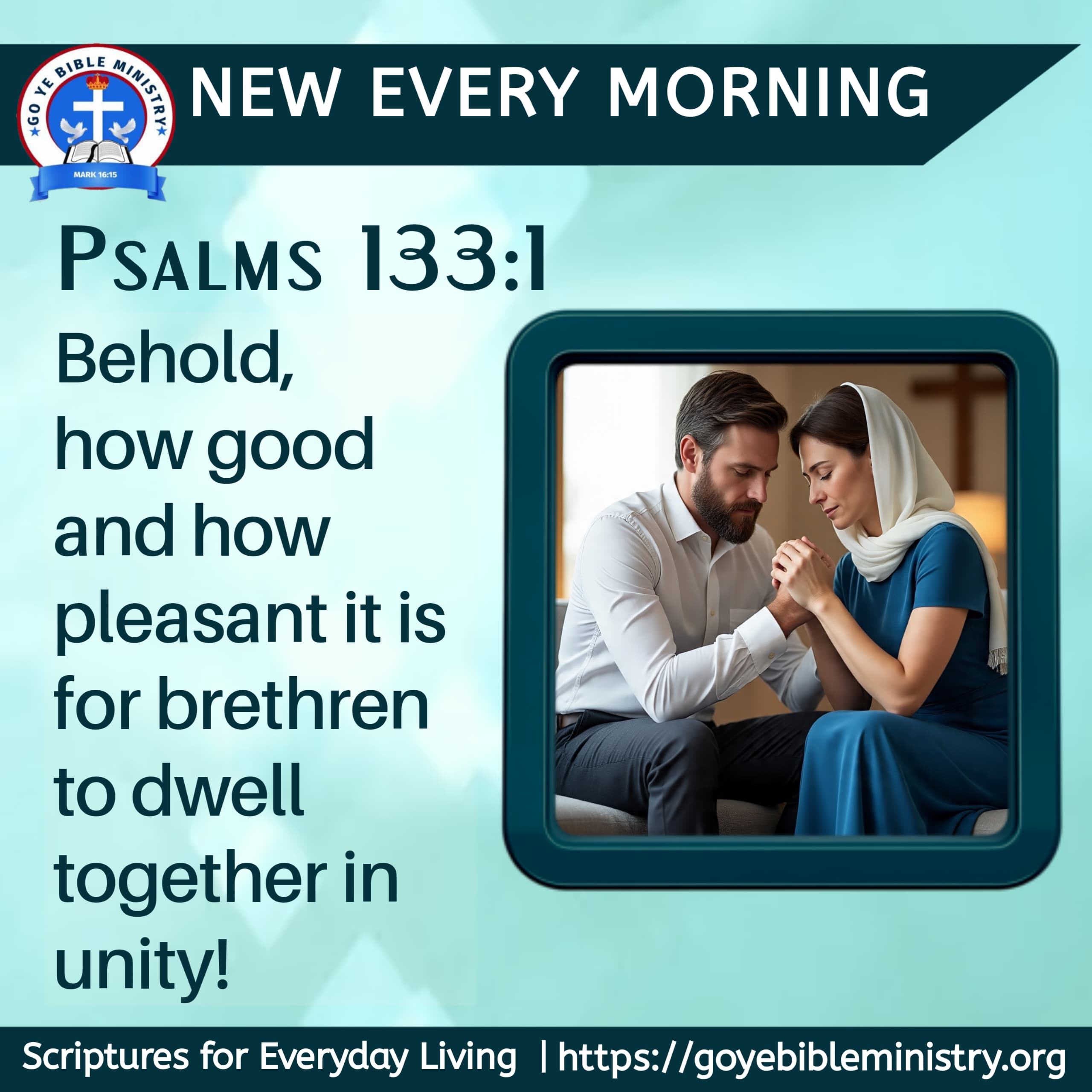
KEY VERSE: “Behold, how good and how pleasant it is for brethren to dwell together in unity!” – Psalm 133:1
Marriage is a holy and sacred union ordained by God, designed to reflect Christ’s relationship with His Church (Ephesians 5:25–27). Like a three-legged stool, a stable marriage requires all its essential supports to stand firm. When one is missing, the entire structure becomes weak and unstable. Scripture and life experience reveal three indispensable ingredients that sustain a godly and enduring marriage: fellowship, faithfulness, and forgiveness. The absence of any of these introduces cracks into the wall of marriage, often unnoticed at first, but dangerous over time (Ecclesiastes 4:12).
The first essential ingredient is FELLOWSHIP. Fellowship in marriage goes beyond living under the same roof; it is intentional companionship, friendship, shared life, and emotional presence. God Himself emphasized togetherness when He said, “It is not good that the man should be alone” (Genesis 2:18). Fellowship means sharing time, thoughts, burdens, joys, prayers, and daily experiences. Scripture declares, “Can two walk together, except they be agreed?” (Amos 3:3). Biblical examples such as Priscilla and Aquila reveal a marriage strengthened through shared purpose, ministry, and partnership (Acts 18:2–3, 18, 26). Manoah and his wife also modeled fellowship through open communication and mutual participation in God’s dealings with their family (Judges 13:8–12). Fellowship nurtures unity, deepens intimacy, and protects the marriage from loneliness and emotional distance. This is why Scripture urges couples to “dwell together with understanding” (1 Peter 3:7). Consistent fellowship—praying together (Matthew 18:19–20), eating together (Acts 2:46), and communicating daily—keeps love alive and marriages resilient.
The second essential ingredient is FAITHFULNESS. Faithfulness is not optional in marriage; it is a covenant responsibility established at the altar of “I do” (Malachi 2:14–15). Scripture clearly states, “Moreover it is required in stewards, that a man be found faithful” (1 Corinthians 4:2). Faithfulness involves being trustworthy, committed, steady in affection, and true in every area of life—emotionally, financially, spiritually, and sexually. God commands marital purity: “Drink waters out of thine own cistern” (Proverbs 5:15), and Hebrews 13:4 reminds us that “marriage is honourable in all, and the bed undefiled.” Unfaithfulness often begins in the heart and mind (Matthew 5:28), as seen in David’s downfall with Bathsheba (2 Samuel 11–12). Scripture warns that unchecked desire leads to destruction (James 1:14–15). Faithful marriages, however, attract divine blessing and raise godly generations, as seen in Zechariah and Elizabeth (Luke 1:6, 13–17) and Joseph and Mary (Matthew 1:24–25). Remaining faithful requires spiritual alertness (Romans 8:6), guarding the heart (Proverbs 4:23), and deliberately nurturing love within the marriage (Song of Solomon 2:15).
The third essential ingredient is FORGIVENESS. Marriage is a journey involving imperfect people, and offences are inevitable (Ecclesiastes 7:20). What determines the health of a marriage is not the absence of hurt, but the willingness to forgive. Scripture commands, “Forbearing one another, and forgiving one another… even as Christ forgave you” (Colossians 3:13). Unforgiveness, bitterness, and resentment grieve the Holy Spirit (Ephesians 4:30–31) and poison the atmosphere of the home. Jesus made forgiveness a non-negotiable requirement for believers (Matthew 6:14–15). True forgiveness requires humility, because “God resisteth the proud, but giveth grace unto the humble” (James 4:6). Pride prevents apology, but humility restores unity (Proverbs 16:18). A sincere apology and a forgiving spirit heal wounded hearts and rebuild trust (Proverbs 15:1). Forgiveness is not about fairness or revenge; it is about obedience and freedom. Scripture exhorts us to be “kind one to another, tenderhearted, forgiving one another, even as God for Christ’s sake hath forgiven you” (Ephesians 4:32). When forgiveness is practiced, love is preserved, peace is restored, and the marriage flourishes (1 Corinthians 13:5).
In conclusion, a stable and joyful marriage is built and sustained by intentional fellowship, unwavering faithfulness, and Christ-like forgiveness. These three ingredients work together to create unity, trust, intimacy, and endurance. When couples dwell together in unity (Psalm 133:1), remain faithful to their vows (Proverbs 20:6), and forgive as Christ forgave (Matthew 18:21–22), marriage becomes not only survivable but deeply fulfilling and glorifying to God.
SEARCHLIGHT: A happy and stable marriage is sustained by daily fellowship, lifelong faithfulness, and continual forgiveness—never give up on nurturing these essentials.
PRAYER: Father, thank You for the gift of marriage. Grant us the grace to dwell together in true fellowship, to remain faithful in every area of our union, and to forgive one another as Christ forgave us. Heal every crack, restore every broken place, and let our marriages reflect Your love and glory. In Jesus’ name, Amen.
BIBLE READING: Exodus 27-29 | Acts 26
PASTOR MICHAEL OMOLE