
THE PATHWAY OF WISDOM
FEBRUARY 27, 2026
TEXT: Proverbs 12:1–16
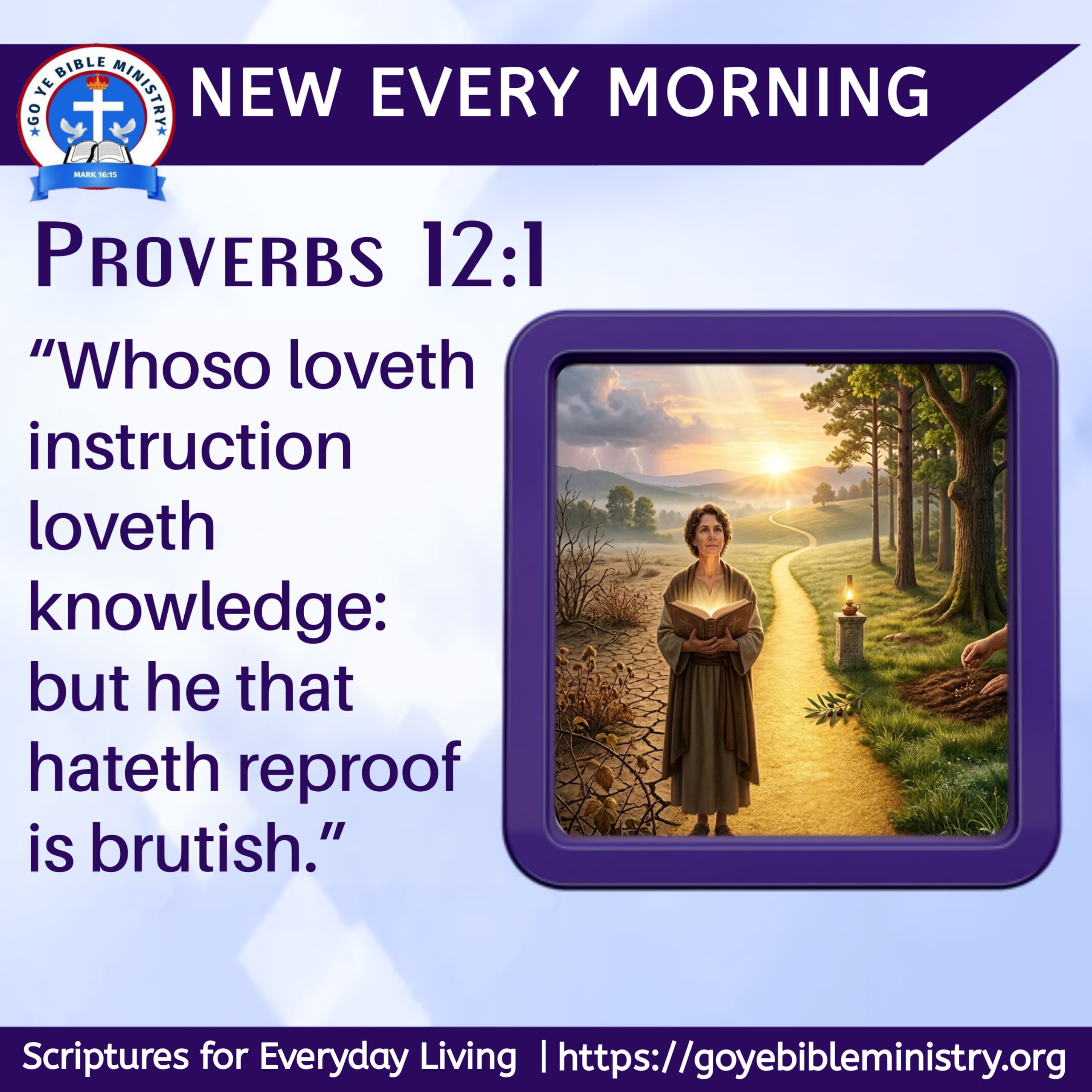
KEY VERSE: “Whoso loveth instruction loveth knowledge: but he that hateth reproof is brutish.” — Proverbs 12:1
This chapter presents a vivid contrast between wisdom and folly, righteousness and wickedness, restraint and impulsiveness. Rather than telling a story, the passage paints patterns — showing how character quietly determines destiny. It reveals that what a person loves, how a person speaks, and how a person reacts under pressure ultimately shape their outcome.
The key verse immediately establishes a foundational principle: the love of instruction is the love of growth. Correction is not humiliation; it is cultivation. A teachable heart remains expandable, while a defensive heart limits its own development. Therefore, believers must learn to welcome rebuke when it is rooted in truth. Growth often arrives disguised as discomfort.
Furthermore, the passage emphasizes that righteousness establishes stability. A good person obtains favor from the Lord, and integrity strengthens foundations. In contrast, wickedness cannot take deep root. Though it may appear strong temporarily, it lacks endurance. Consequently, believers are reminded that character sustains what talent begins. Without righteousness, success becomes fragile.
Moreover, much attention is given to speech. The thoughts of the righteous are just, and their words bring deliverance; however, the words of the wicked carry traps. This reveals that speech is not casual — it either builds or binds. Words can rescue reputations or destroy relationships. Thus, believers must guard both their meditation and their expression, understanding that the tongue reflects the heart’s condition.
In addition, diligence appears as a silent yet powerful force. The hand of the diligent leads, while laziness leads to subjection. This teaches that wisdom is not passive; it is productive. Faith does not excuse carelessness. Instead, faith strengthens responsibility. Discipline positions a person for influence and trust.
Likewise, emotional control becomes a defining trait. A fool quickly displays anger, but a prudent person overlooks an insult. This demonstrates that maturity is seen in restraint. Reacting instantly may feel powerful, yet true strength lies in measured response. Self-control preserves dignity, while uncontrolled temper exposes immaturity.
Altogether, Proverbs 12:1–16 teaches that wisdom is not dramatic — it is consistent. It grows through correction, speaks with intention, works diligently, and responds with restraint. Folly, on the other hand, resists growth, misuses speech, avoids effort, and reacts without reflection.
SEARCHLIGHT: What you love — correction or comfort — will determine whether your life grows in wisdom or remains trapped in folly.
PRAYER: Father, give me a heart that loves instruction and does not resist correction. Root me in righteousness so that my life may stand firm. Guard my thoughts, discipline my tongue, and help me respond with wisdom under pressure. Teach me diligence in all I do, and let Your wisdom shape my character daily. In Jesus’ name, Amen.
BIBLE READING: Deuteronomy 25-27 | 2 Corinthians 2.
PASTOR MICHAEL OMOLE