
THE HEART THAT FORGIVES
MARCH 9,2026
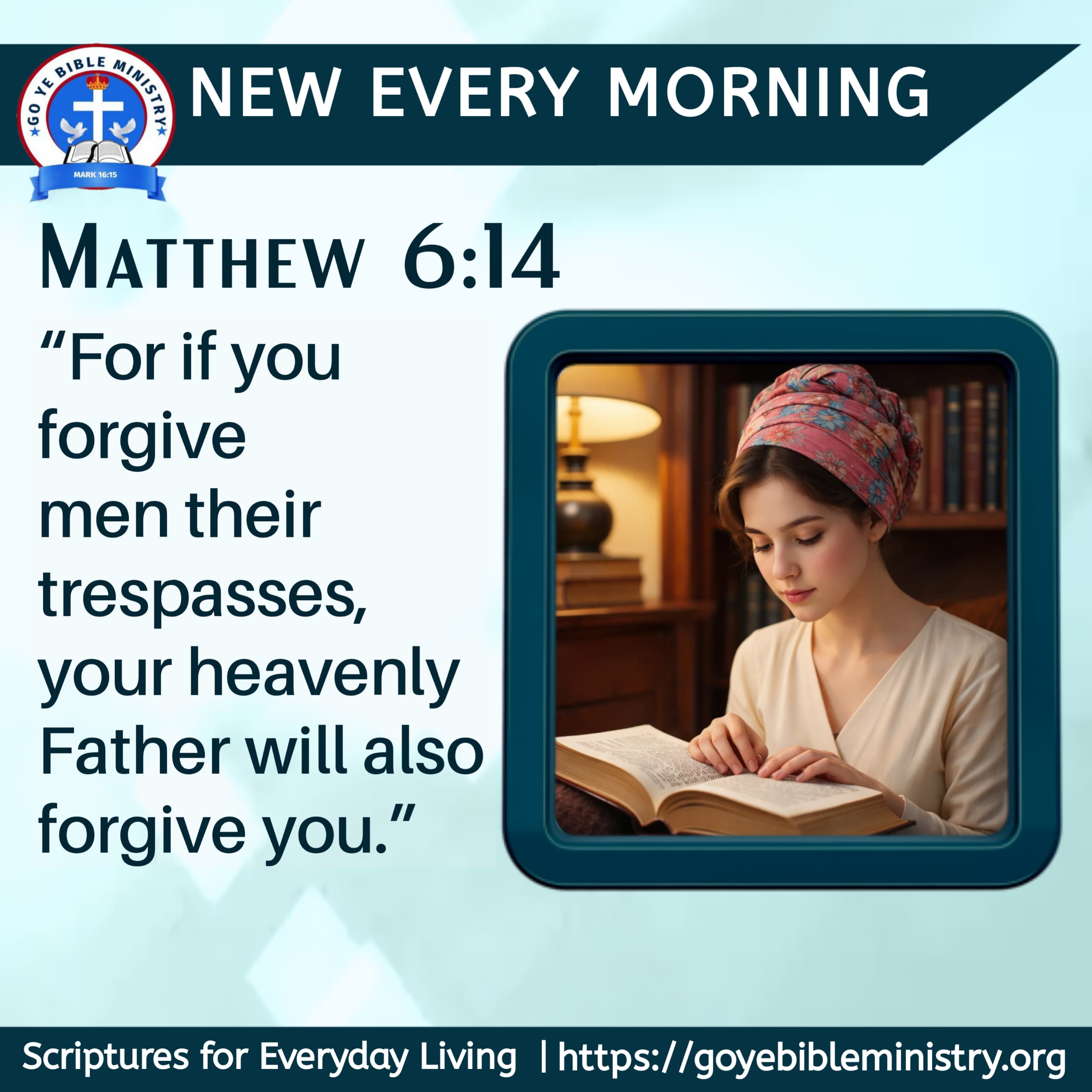
TEXT: MATTHEW 6:14
KEY VERSE : “For if you forgive men their trespasses, your heavenly Father will also forgive you.” — Matthew 6:14
This statement of Jesus comes immediately after the Lord’s Prayer. In that prayer, believers are taught to ask God for forgiveness for their sins. Jesus then expands the thought by showing that forgiveness is not only something we receive from God; it is also something we must extend to others. Forgiveness therefore becomes a mark of a transformed heart. A person who has truly experienced the mercy of God cannot comfortably live with a spirit of bitterness or revenge.
The word “trespasses” refers to offenses, wrongs, or injuries committed against us. In daily life, people will say things that hurt us, treat us unfairly, disappoint us, or act in ways that cause pain. Jesus does not deny that these things happen. Instead, He teaches that the believer must choose a different response. Forgiveness means releasing the offender from the debt we feel they owe us. It is the decision not to hold on to anger or keep a record of the wrong.
When a person refuses to forgive, the heart becomes a place where resentment grows. Bitterness slowly takes root and affects many areas of life. It disturbs peace, weakens spiritual focus, and damages relationships. Unforgiveness also blocks spiritual growth because the heart becomes hardened. A heart filled with offense finds it difficult to pray sincerely, worship freely, or experience the joy of fellowship with God.
Jesus connects our willingness to forgive others with our experience of the Father’s forgiveness. The meaning is not that we earn God’s forgiveness by forgiving people. Rather, forgiveness reveals the condition of our hearts. A heart that has truly understood how much God has forgiven it will naturally show mercy to others. Remembering God’s grace softens the heart and makes forgiveness possible.
Forgiveness also brings freedom. Holding on to offense ties a person to the pain of the past. Every memory of the event reopens the wound. But when forgiveness is given, the power of that offense is broken. The person who forgives is no longer controlled by the injury. Peace begins to replace anger, and healing begins to take place within the heart.
Practicing forgiveness does not mean that what happened was right, nor does it mean that trust is automatically restored. Forgiveness simply means releasing the desire for revenge and placing the matter in God’s hands. It is an act of obedience that reflects the character of God, who has shown immeasurable mercy toward us.
For believers, forgiveness must therefore become a daily discipline. In families, friendships, workplaces, and church life, offenses will occur. But the follower of Christ must continually choose mercy over resentment. In doing so, we demonstrate that we truly understand the grace that God has extended to us.
SEARCHLIGHT: A heart that remembers how much it has been forgiven will find the strength to forgive others.
PRAYER : Lord, help me to release every offense and every hurt that I carry in my heart. Teach me to forgive just as You have forgiven me. Remove bitterness and replace it with grace, patience, and love. Let my life reflect the mercy I have received from You. In Jesus’ name, Amen.
BIBLE READING : Joshua 15-17 | 2Corinthians 10